
How to Create Forms
Welcome to the world of hassle-free form creation with EO Forms. Gone are the days of complicated form building and the need for coding expertise. We've revolutionized the process to be smooth and user-friendly, allowing you to construct your form effortlessly, right from scratch.
Step 1: Navigating to EO Forms
Imagine embedding a form on your website that integrates flawlessly with your existing design, requiring no additional adjustments. That's the ease EO Forms brings to you. To get started:
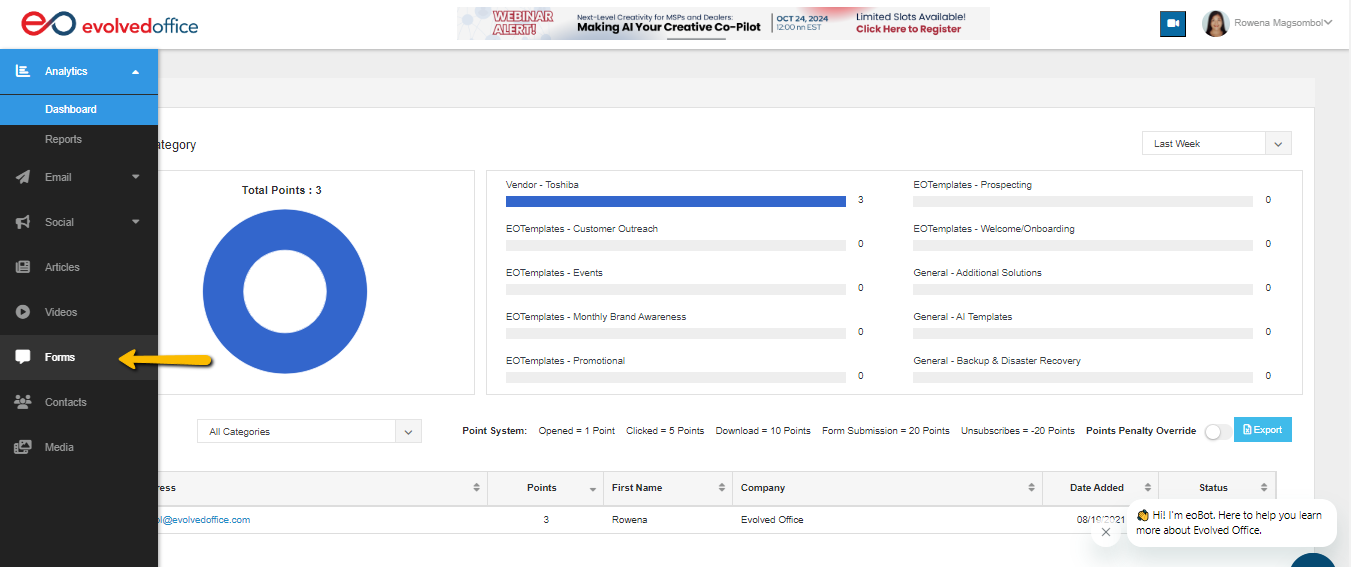
- Navigate to the Forms section on the left-hand menu.
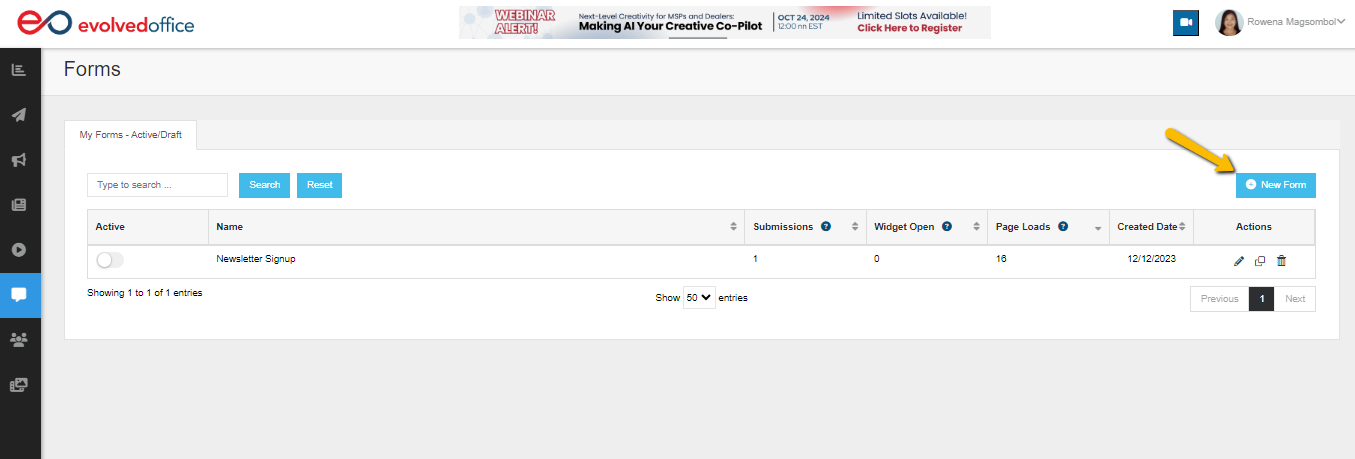
- Click the prominent New Form button in the upper left corner to begin.
Step 2: Naming Your Form
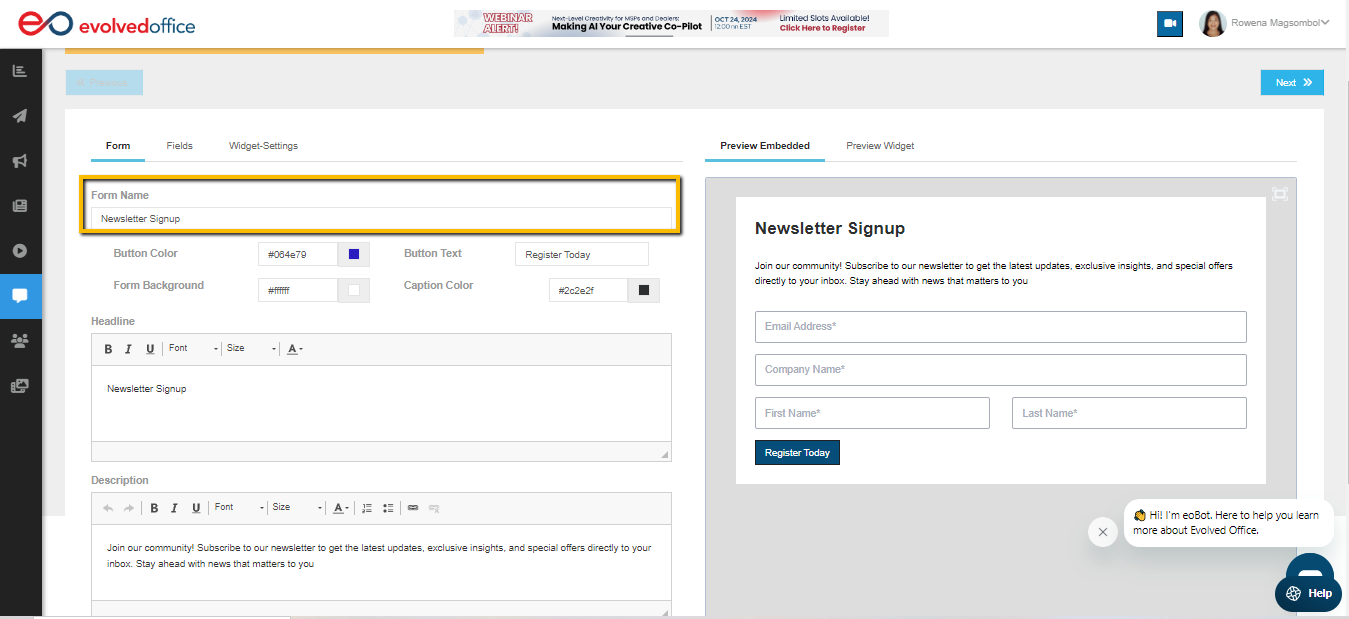
Start by giving your form a name. For example, if it's for a newsletter subscription, you might name it Newsletter Signup.
Step 3: Customizing Your Form
Customization is key with EO Forms. You can:
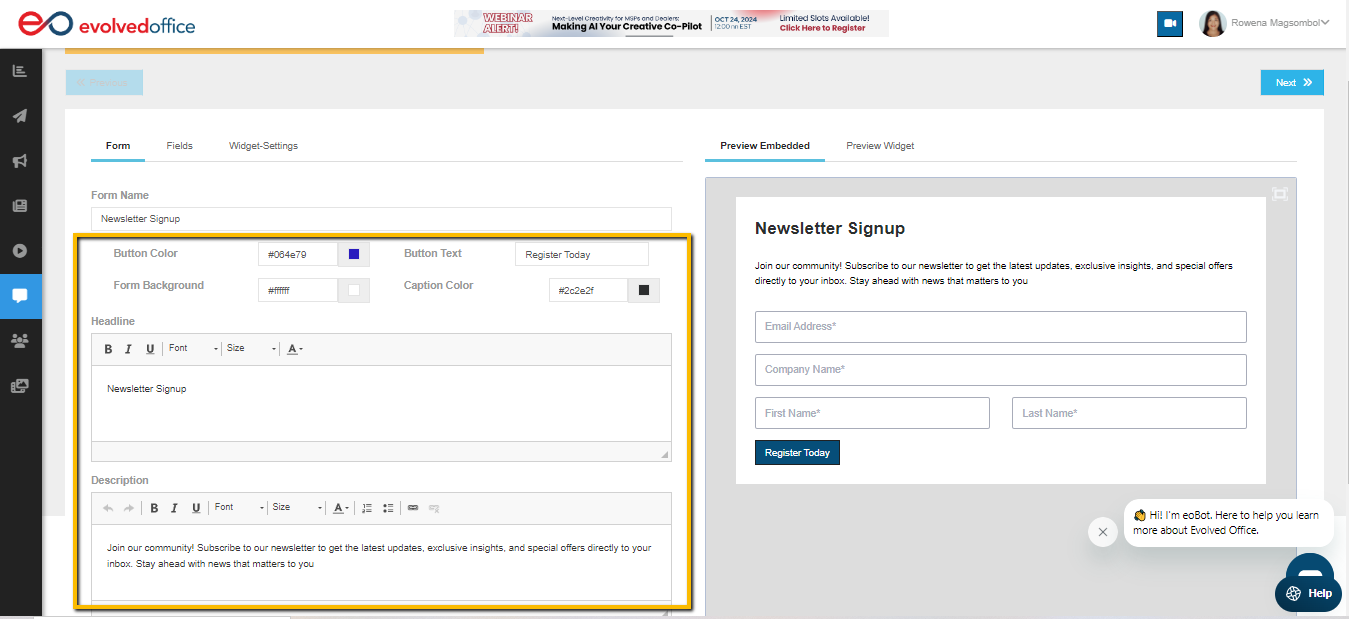
- Button Color: Customize the color of your form's CTA button to match your branding.
- Button Text: Change the text displayed on your CTA (Call-to-Action) button by entering your preferred wording in the Button Text field. For example, you can replace "Submit" with "Register Today," "Subscribe Now," or "Get Started."
- Form Background: Set your form's background color.
- Caption Color: Change the caption color by selecting from the color palette or entering a hex code.
- Headline: Edit the form's headline to communicate its purpose.
- Description: Add or update the description to provide additional information to visitors.
As you make changes, you can view them in the Preview Embedded section on the right to see how your form will appear to visitors.
Personalize the form by editing the headline and including a description that matches your brand's tone.
Step 4: Adding Fields
To add additional fields to your form, follow these steps:
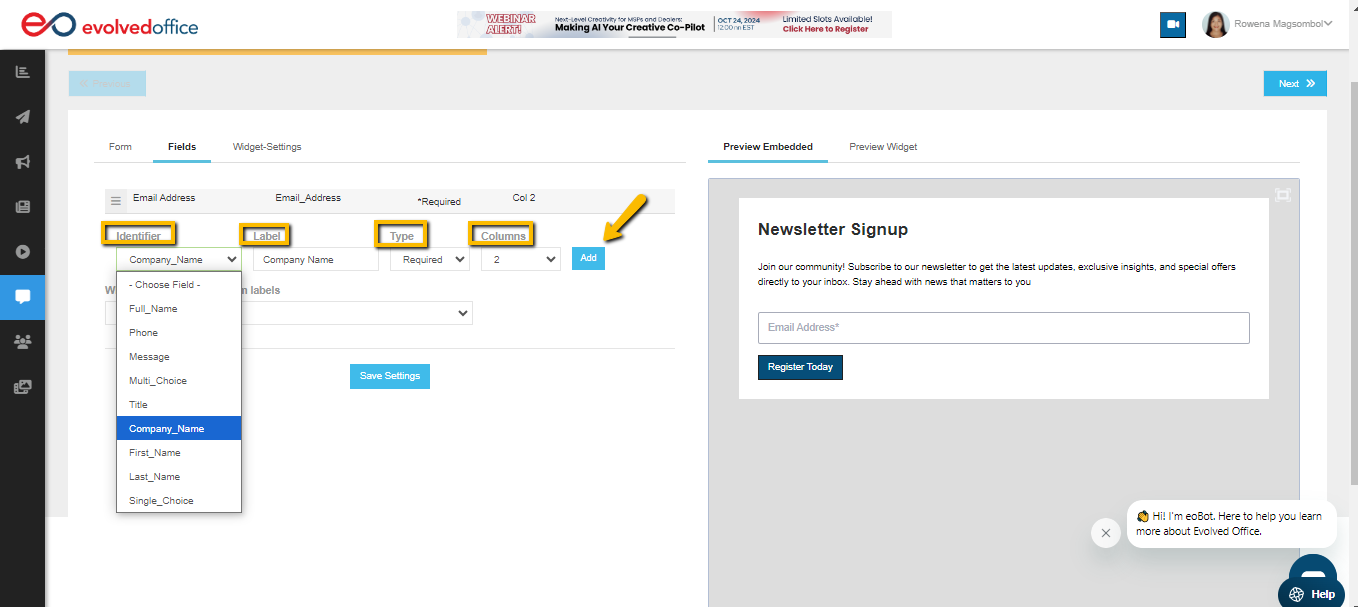
- Navigate to the Fields Section.
- In the Identifier dropdown, select the field type (e.g., Email Address, First Name, Company Name, etc.).
- Enter a Label for the field (e.g., Email, Name, Company, etc.).
- Choose whether the field is Optional or Required.
Select the Column option for the layout, then click "Add."
Understanding Column Layouts
You have two layout options:
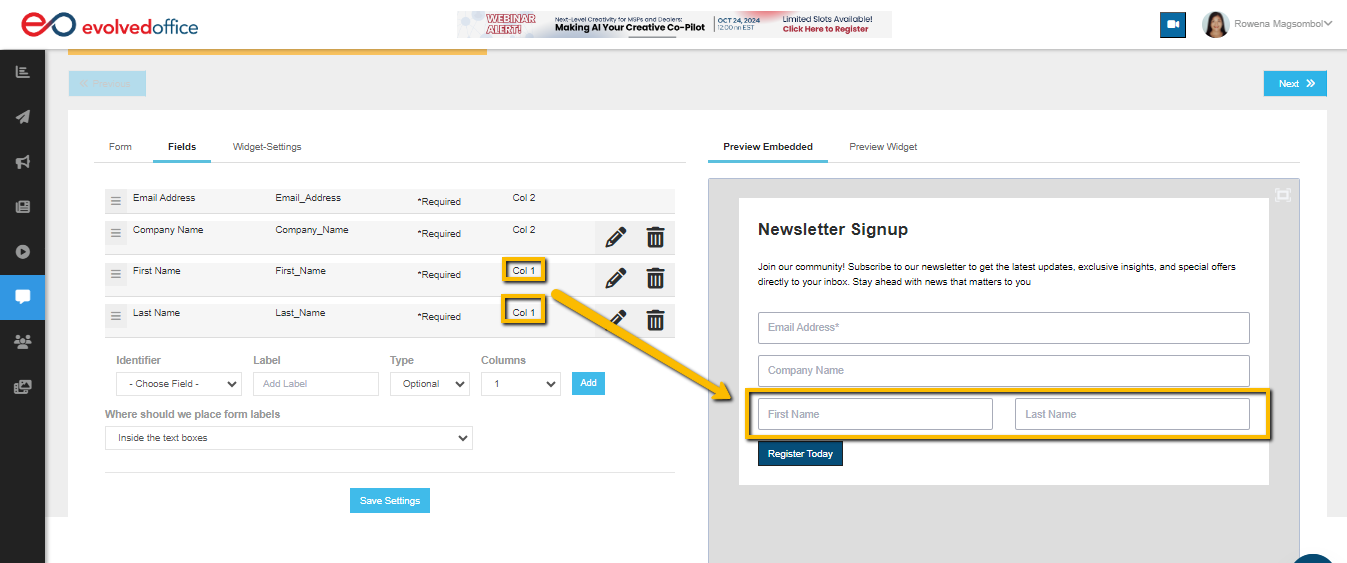
Column 1 (Half Width): Places the field side by side with another field, allowing two fields to appear on the same row. For example, First Name and Last Name.
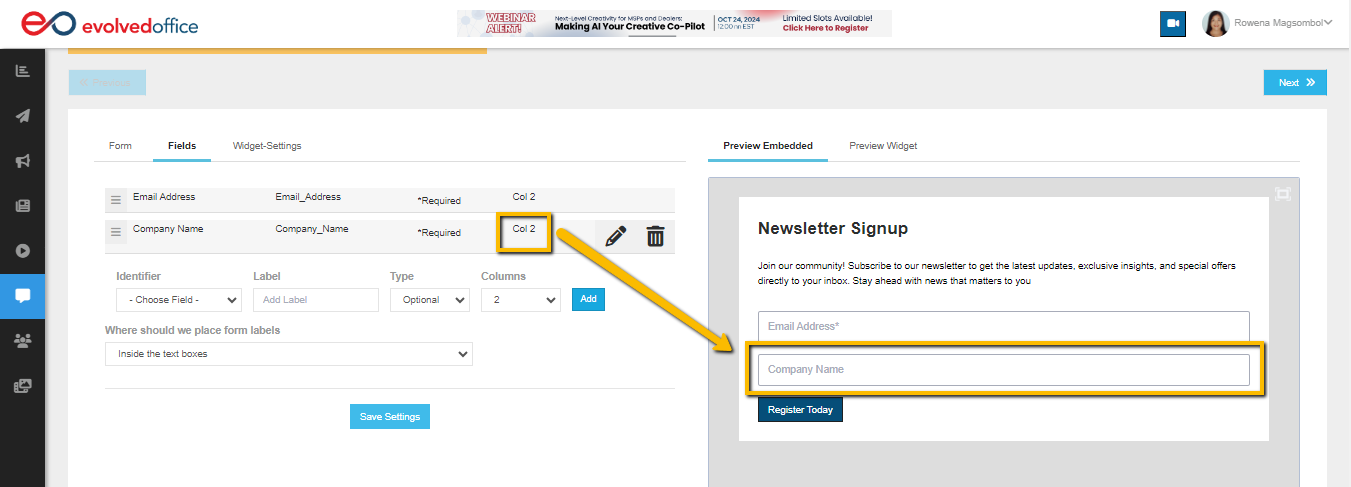
Column 2 (Full Width): Displays the field across the entire width of the form. For example, Email Address or Company Name.
Single-Choice and Multi-Choice Fields
In addition to standard text fields, EO Forms allows you to create selection-based fields, making it easier for visitors to provide specific answers.
Single-Choice Field
A Single-Choice field allows visitors to select only one option from a predefined list of choices.
For example, you can create a field labeled Inquiry Type with the following options:
- Sales Inquiry
- Technical Support
- Product Information
- Billing & Account Questions
- Request a Demo
- Other
Visitors can select only one option that best describes their inquiry.
Multi-Choice Field
A Multi-Choice field allows visitors to select multiple options from the available choices.
Using the same Inquiry Type example, visitors can select more than one option if their inquiry covers multiple topics, such as Sales Inquiry and Product Information.
Visitors can select multiple services based on their interests.
Key Difference:
Single-Choice: Visitors can select only one answer.
Multi-Choice: Visitors can select multiple answers.
These fields are especially useful for gathering information about customer interests, service preferences, or specific business needs.
Previewing and Saving Your Fields
As you add and customize fields, review the form preview on the right to see how they will appear to visitors.
Once you're satisfied with your fields and layout, click Save Settings to save your changes.
Step 5: Managing Post-Signup Actions
After setting up your form, click Next to manage post-signup actions:
- Notification Emails: Enter the email addresses to receive notifications when the form is submitted.
- Confirmation Message: Customize the default confirmation message or redirect users to a specific webpage after submission by entering the URL.
- Welcome Email: To send a welcome email, check the box and compose your email message.
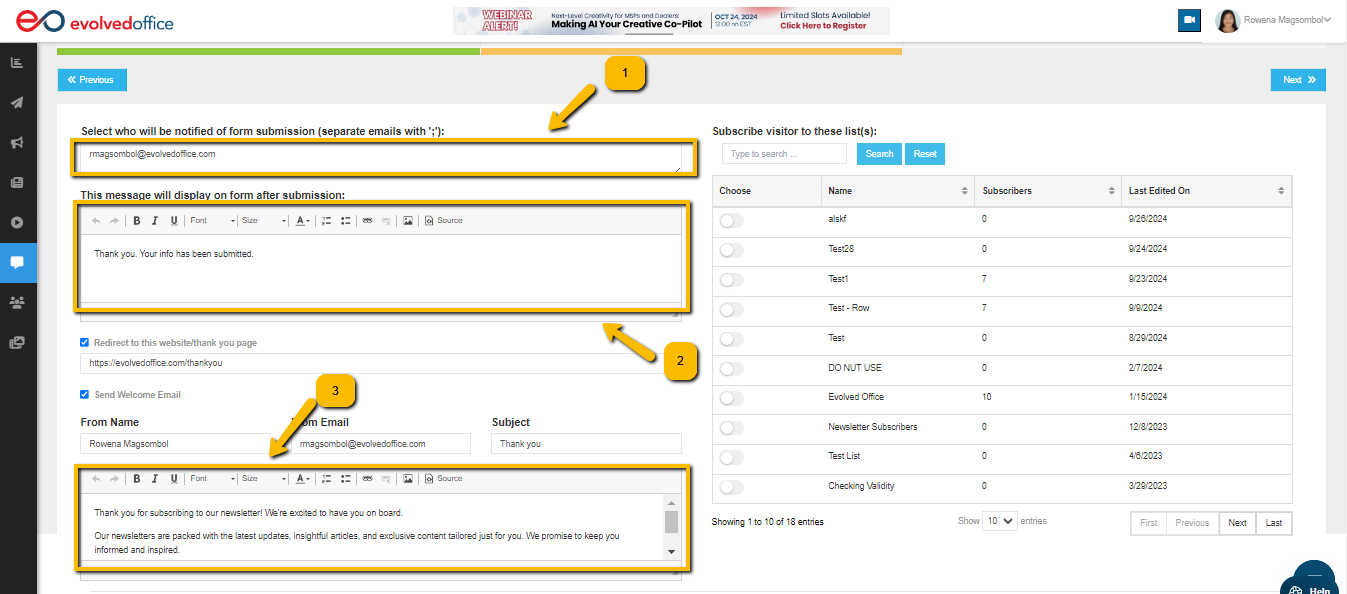
Additionally, on the right side, you have the option to add registrants to one or more email lists for future communications.
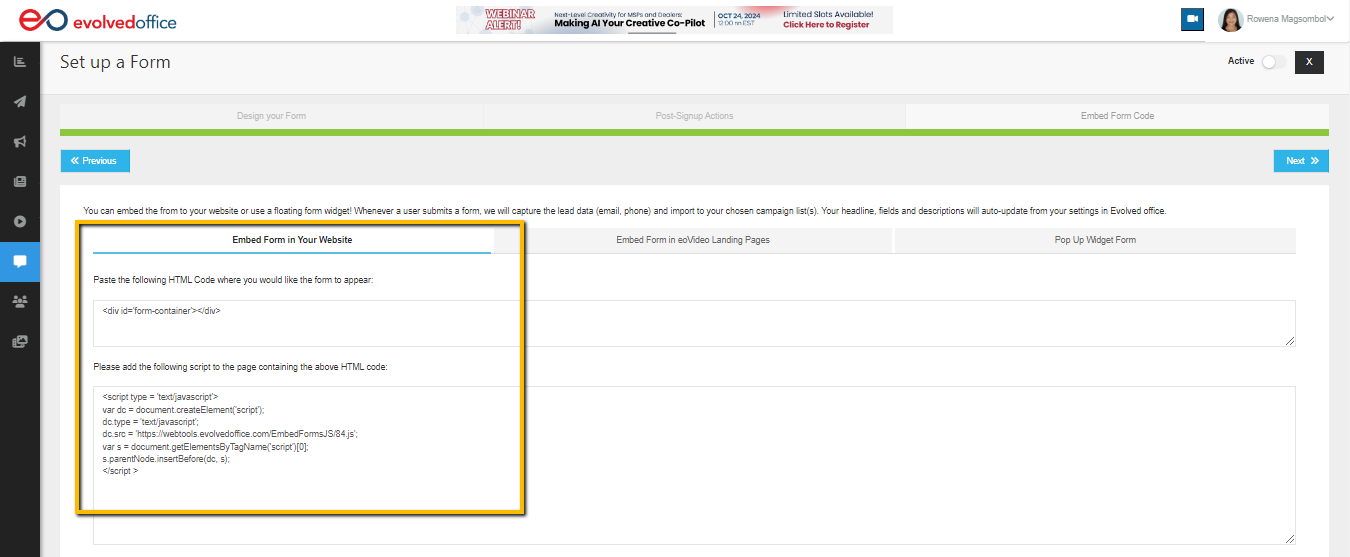
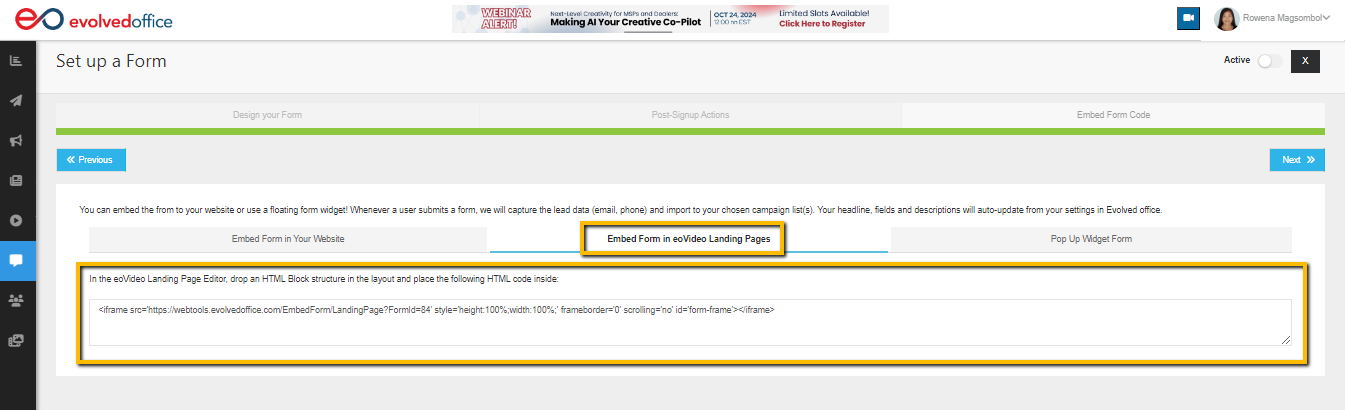
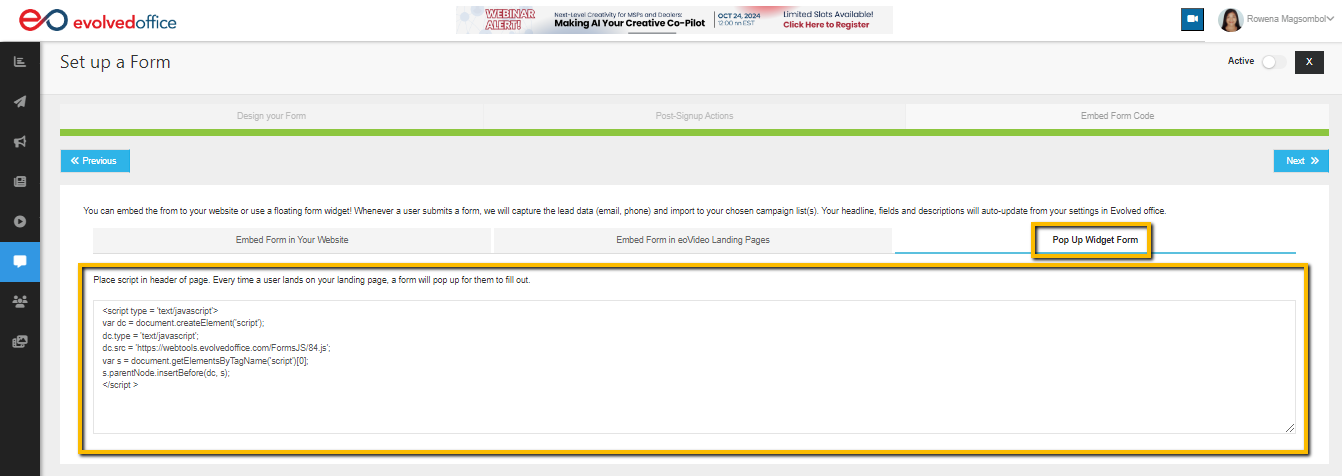
Step 6: Embedding the Form
Once you're done customizing the form:
- Click Save Settings.
- Then, click "Next" to get you the HTML code to embed the form on:
- Your website
- An eoVideo landing page
- A pop-up widget
Step 7: Adding Forms to Landing Pages
In addition to embedding forms on your website, you can also add your existing EO Forms directly to regular landing pages and video landing pages within Evolved Office.
This allows you to collect visitor information, generate leads, accept inquiries, and encourage signups directly from your landing pages.
Depending on the type of landing page you're creating, follow the appropriate guide below:
Adding Forms to a Regular Landing Page: Learn how to insert an existing EO Form into your landing page using the Form Structure in the editor.
Adding Forms to a Video Landing Page: Learn how to include an EO Form alongside your video to collect viewer information, inquiries, or registrations.
Tip: Before adding a form to a landing page, make sure it has been created, saved, and activated in EO Forms. Once activated, you can select your existing form and add it to your landing page without having to build it again.
EO Forms transforms form creation from a task into an enjoyable journey, putting you firmly in control. So why wait any longer? Dive into creating your custom forms with EO Forms today!